
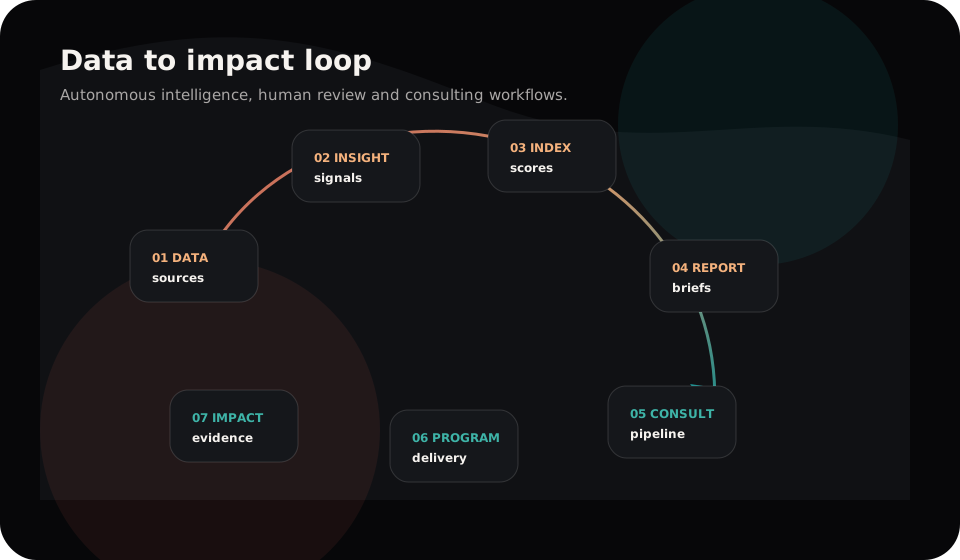
Data to impact loop
Shows the platform pathway from source ingestion to insights, reports, consulting and measurable programs.
Mahwari Nexus brings together SRHR data, menstrual-health intelligence, startup innovation, policy research and consulting workflows so organizations can move from evidence to action.
Mahwari Nexus now uses a more complete visual language: operating loops, report stacks, traceability diagrams and privacy-first youth guidance scenes that make the platform feel like infrastructure rather than a brochure.
Shows the platform pathway from source ingestion to insights, reports, consulting and measurable programs.
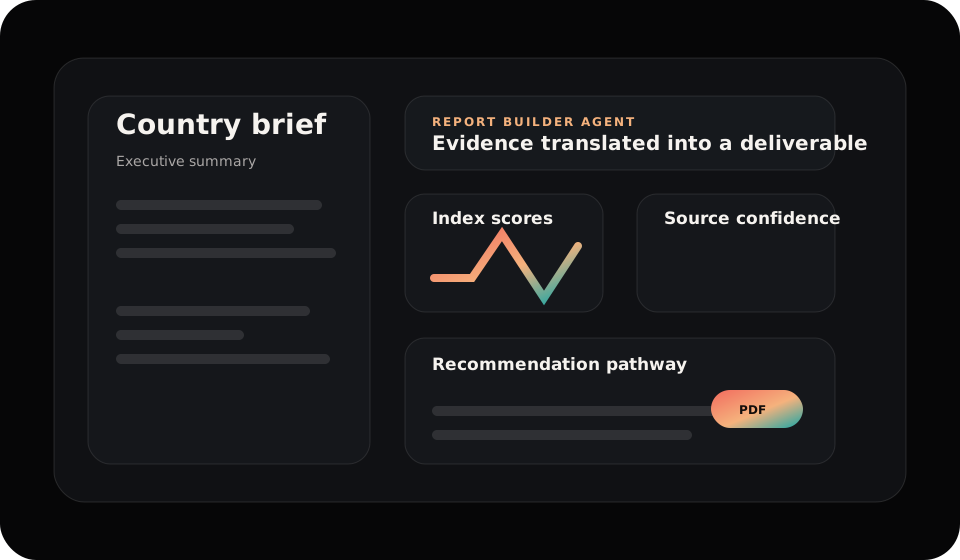
Frames comprehensive briefs as source-led outputs with charts, index scores, methodology and review notes.
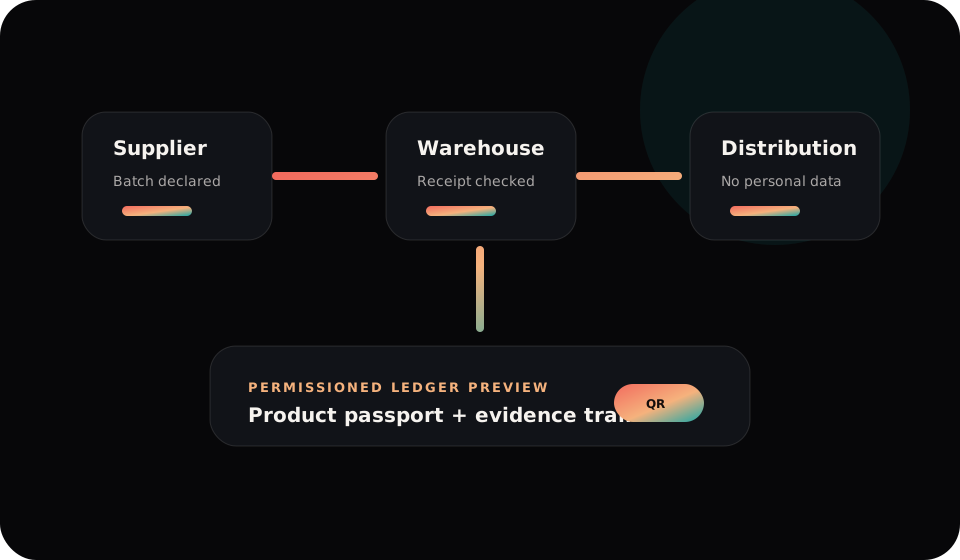
Imagines QR product passports and permissioned event trails without exposing beneficiary identities.
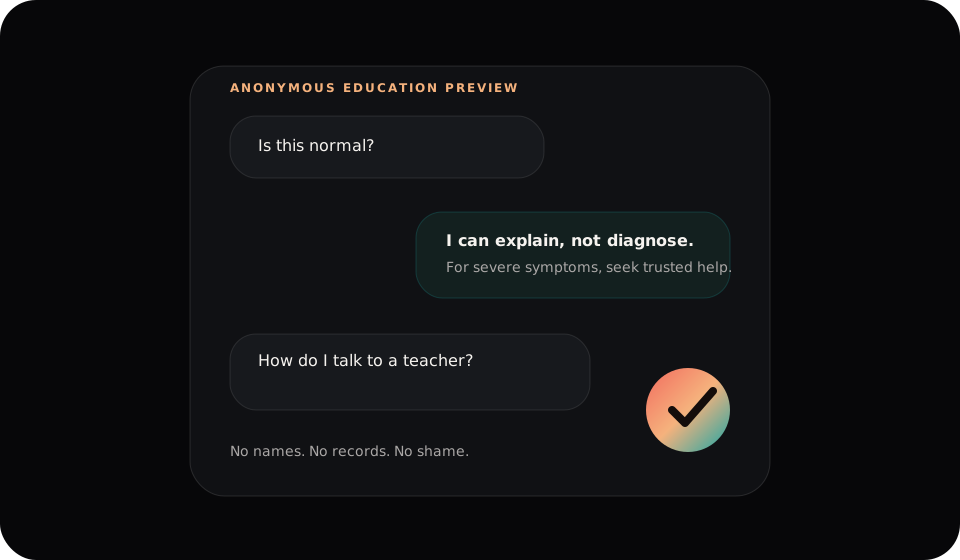
Signals an anonymous, education-first interface with strong no-diagnosis and privacy boundaries.
Open-source Health Icons are used for neutral public-health visuals across data, privacy, WASH and report contexts. They complement the original Mahwari Nexus visualizations without using protected institutional marks.

Source catalogs, indicator files and data-health checks.

Secure forms, no personal health details and human review.

School, humanitarian and workplace readiness signals.

Downloadable PDF and CSV outputs for reviewable decisions.
Icon source: Health Icons, open-source public-health SVG set. Public source names on this site identify evidence references only; no affiliation or endorsement is implied.
Public evidence and implementation references No affiliation or endorsement implied
Ask evidence questions across a global official proxy snapshot, compare countries, explore data vintage and gaps, then request verified analysis.
Latest published WDI proxy values across 217 geographies, plus focus-country trend depth.
Compare WASH, education, poverty and SRHR context indicators.
Prototype indices never present missing inputs as official evidence.
Quality checks, proprietary indices, report previews, routing, privacy review and implementation workflows.
Every major section now lets visitors explore, score, generate, route or plan something useful immediately.
Compare Pakistan, India, Bangladesh, Kenya, Nigeria and Uganda profiles.
Open profilesExplore proprietary risk, readiness, policy, affordability and innovation scores.
Explore scoresInspect source freshness, mapped APIs, missing values and verification queues.
Check data healthRoute institutional requests into lead summaries and proposal skeletons.
View workflowScore menstrual equity and estimate products, disposal, training and policy actions.
Start auditAssess readiness, teacher training, product access, parent notes and monitoring.
Build programEstimate kit needs, procurement, distribution, privacy and monitoring actions.
Estimate responsePreview QR traceability, product passports and permissioned-ledger audit trails.
Trace product flowGenerate HTML previews from index scores, source gaps and recommendations.
Generate briefAnonymous education-first guidance with clear no-diagnosis safety boundaries.
Ask safelyMap grants, tenders, donor calls, CSR opportunities and bid-fit signals.
Track opportunitiesThree connected product layers organize research questions, institutional requests and emerging innovation into action-ready outputs.
Generate policy briefs, program plans, school modules, workplace recommendations and donor-ready reports from trusted sources.
Map affordability constraints, verify applicable tax rules, compare public-provision pathways and define monitoring indicators before recommendations.
Route leads from NGOs, workplaces, schools, governments, donors and startups into structured intake forms and service pathways.
Map period trackers, diagnostics, sustainable products, waste solutions, reusable products, workplace tools and femtech ventures.
Define a decision, setting and institutional objective.
Review sources, indicators, stakeholders and gaps.
Structure briefs, reports, curricula or plans.
Match expert support to the engagement pathway.
Operationalize programs, policies and partnerships.
Track indicators, learning and responsible impact.
Build intelligence products and service workflows across policy, education, employers, emergencies and the innovation ecosystem.
Priority research and consulting requests.
Indicators and context side by side.
Access and affordability research.
Policy, products and facilities.
CSE, WASH and educator support.
Products and venture signals.
Briefs and reform research.
Cited output frameworks.
Humanitarian scoping support.
Structured organizational intake.
Need an institutional response rather than general information?
Talk to Mahwari NexusGovernments, NGOs, donors, international organizations, companies, schools, researchers, accelerators and menstrual-health or femtech ventures.
No. Mahwari Nexus provides educational, research and consulting information, not personal medical diagnosis, treatment or emergency care.
Yes. Structured requests can cover strategy, policy, implementation, M&E, humanitarian response, workplace programs and commissioned analysis.
Scoping begins with transparent sources such as WHO, UNFPA, UNICEF and the World Bank, then adds verified local, governmental and program-specific evidence as required.
Yes. Startup submissions are reviewed before any inclusion or evaluation in the innovation observatory.
Public forms are designed for organizational requirements only and should not contain sensitive personal health information. See the privacy and ethics notice.
Yes. Employers can request a period-positive workplace audit covering facilities, product access, policy, communication and training.
Yes. Schools and education programs can request readiness assessment, curriculum adaptation, teacher training and parent engagement support.